
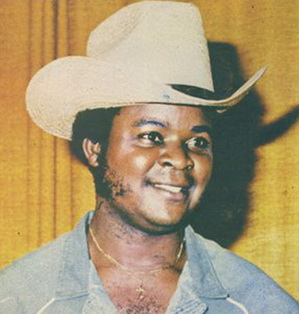
There are artists who seek fame, and then there are artists who seem almost puzzled by it. William Onyeabor belongs firmly in the second category. He recorded a series of extraordinary synthesizer-driven albums in Nigeria between the late 1970s and mid-1980s, then quietly stepped away from music entirely, became a Christian, and spent decades refusing to discuss his past work. When the world rediscovered him decades later — through a celebrated reissue project — he politely but firmly declined the spotlight. The music, however, refused to stay silent.
William Onyeabor Biography
| Full Name | William Onyeabor |
|---|---|
| Date of Birth | Circa 1946 (exact date unconfirmed) |
| Place of Birth | Enugu-Ukwu, Anambra State, Nigeria |
| Nationality | Nigerian |
| Ethnicity | Igbo |
| Occupation | Musician, Businessman, Born-again Christian |
| Known For | Pioneering electronic/synthesizer-based Afrobeat-funk in the 1970s–80s |
| Religion | Born-again Christian |
Early Life and Background
William Onyeabor was born in Enugu-Ukwu, a town in Anambra State in southeastern Nigeria, around 1946. Much of what is “known” about his early life exists in a murky realm between fact and legend — partly because Onyeabor himself, after his religious conversion, consistently refused to speak about his past in any detail, leaving journalists and researchers to piece together fragments.
What is reasonably established is that he was Igbo, from a part of Nigeria where commerce, education, and entrepreneurship were deeply embedded in the culture. He reportedly studied law in the Soviet Union and film in Canada at some point in the 1960s — claims that have been neither verified nor definitively disproven. Whether those educational chapters are accurate or embellished, they speak to an Onyeabor who was clearly worldly, internationally exposed, and intellectually curious well before his music career took shape.
He was known to have been married, and by the time of his later years, lived in Enugu-Ukwu as a respected community figure — owning a flour mill, a publishing house, and other business ventures.
Career Journey: The Synthesizer Visionary
Building a Studio Before Releasing an Album
What distinguishes Onyeabor from virtually every other Nigerian musician of his era is that he built his own recording studio — Wilfilms Studio — in Enugu-Ukwu before he released his debut album. This was an extraordinary act of self-sufficiency that gave him full creative and financial control over his recordings at a time when Nigerian musicians typically depended on Lagos-based studios and distributors.
He also pressed his own vinyl records and distributed them himself. The result was a body of work that sounded like nothing else being made in Nigeria at the time — and arguably like very little being made anywhere in the world.
The Music: Synthesizer Funk from the African Interior
Between 1977 and 1985, Onyeabor released approximately nine albums, including standout titles such as Crashes in Love (1977), Better Change Your Mind (1983), and Atomic Bomb (1978). The music was built on synthesizers, drum machines, and electric bass — instruments that were just beginning to define global pop and funk — but arranged and deployed in a way that was unmistakably rooted in Igbo musical sensibility.
The grooves were hypnotic and deeply danceable, often cycling for eight minutes or more in a way that prefigured later developments in electronic dance music. His lyrics, sung in English, oscillated between romantic themes, philosophical reflections, and vaguely spiritual warnings. Songs like “Atomic Bomb” mixed Cold War anxiety with irresistible rhythm. “When the Going Is Smooth and Good” was essentially a sermon with a synthesizer line that could anchor any dance floor.
He was not working in a vacuum — Fela Kuti was a rough contemporary, and highlife remained Nigeria’s dominant popular form — but Onyeabor’s music occupied a unique electronic niche that was decades ahead of its time.
Retirement, Religion, and Silence
In the mid-1980s, at the height of his creative output, Onyeabor became a born-again Christian and essentially stopped making secular music. He dismantled his public persona and focused on his businesses and his faith. For roughly two decades, his music existed largely in the memories of those who had bought his self-pressed records, and in the crates of a small number of international record collectors who recognized their value.
The Luaka Bop Rediscovery
The second chapter of Onyeabor’s fame was not of his making. Around 2012, the American world music label Luaka Bop — co-founded by Talking Heads’ David Byrne — began the process of licensing and reissuing his catalogue. The compilation Who Is William Onyeabor? (released in 2013) introduced him to a global audience of electronic music fans, DJs, and critics who were stunned by the sophistication and forward-thinking nature of his recordings.
The reissue drew admiring commentary from musicians like Damon Albarn of Blur/Gorillaz, members of Caribou, and numerous electronic artists. Yet Onyeabor himself, now a deeply devout Christian community leader, declined all interview requests and refused to engage with the renewed celebration of music he had long put aside. He reportedly said he had “moved on” and preferred to focus on God and his community. The mystery this created only deepened his cult status.
Legacy and Influence
William Onyeabor is now recognized as a visionary who essentially created a form of African electronic music before the genre had a name. His work influenced artists ranging from Afrobeat revivalists to experimental electronic producers. The fact that he achieved this from a private studio in a small Nigerian town — outside the Lagos music industry infrastructure — makes the achievement even more remarkable.
His story also raises interesting questions about genius, faith, and what artists owe their audiences. Onyeabor made the music he felt compelled to make, owned every step of its production, then walked away on his own terms. In an industry defined by artists chasing relevance, his trajectory is genuinely singular.
Net Worth
William Onyeabor’s net worth has never been publicly disclosed, and given his deliberate distance from the media, reliable estimates are not available. His income streams have included music licensing royalties from the Luaka Bop reissues, his flour milling business, and his publishing ventures. He is not known to have pursued commercial endorsements or media appearances. His wealth, whatever its extent, appears to have been modest by international celebrity standards but substantial by the standards of his local community, where he was a respected employer and business figure.
Personal Life
Onyeabor was married and had children, though he kept his family life extremely private. After his religious conversion, he became a prominent figure in his local Christian community in Enugu-Ukwu. Neighbors and community members described him as generous, dignified, and intensely private. He was reportedly known in his community not as a musician, but as a businessman and church elder.
Conclusion
William Onyeabor made some of the most inventive music to come out of Africa in the 20th century, then chose to leave it all behind for faith and family. The world found him again, but he was no longer interested in being found. There is something profoundly compelling about that — the idea that the most important artists sometimes have no need of their own legacy. His music speaks for him loudly enough.
Frequently Asked Questions (FAQs)
Why is William Onyeabor so mysterious?
After becoming a born-again Christian in the mid-1980s, Onyeabor refused to discuss his musical past and declined all media requests, making reliable biographical information difficult to obtain.
What type of music did William Onyeabor make?
He made synthesizer-driven Afro-funk — a hypnotic blend of electronic instrumentation, danceable grooves, and English-language lyrics that was remarkably ahead of its time for the late 1970s and early 1980s.
Was William Onyeabor’s music popular during his lifetime?
It was popular in southeastern Nigeria when first released, but it was only after the 2013 Luaka Bop reissue that he received international recognition.
What is William Onyeabor’s most famous song?
Among international listeners, “Atomic Bomb” and “When the Going Is Smooth and Good” are among the most celebrated tracks from his catalogue.
Is William Onyeabor still alive?
As of the most recent available information, William Onyeabor was living in Enugu-Ukwu, Nigeria, maintaining his private lifestyle away from the music industry.
Disclaimer: Content in this biography is derived from publicly accessible sources and is shared for general awareness. The publisher assumes no responsibility for errors, omissions, or outdated information that may be present.
Leave a Reply