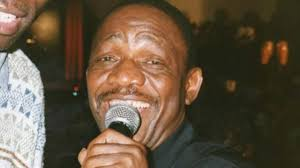
Long before “conscious music” became a marketing term, Sonny Okosuns was already doing the hard work — blending reggae rhythms with distinctly African themes, and using his platform to call for the liberation of South Africa at a time when that idea was considered dangerously political. He was not merely a musician. He was, in many ways, a cultural activist with a guitar. Understanding Sonny Okosuns means understanding a generation of Nigerian artists who believed music could — and should — change the world.
Sonny Okosuns Biography
| Full Name | Sunday “Sonny” Okosuns |
|---|---|
| Date of Birth | January 7, 1947 |
| Place of Birth | Enugu, Nigeria |
| Nationality | Nigerian |
| Ethnicity | Edo/Igbo heritage |
| Occupation | Musician, Singer-Songwriter, Gospel Artist |
| Genres | Afro-Reggae, Afrobeat, Gospel |
| Known For | “Fire in Soweto,” “Which Way Nigeria,” Papa’s Land |
| Religion | Born-again Christian (later years) |
Early Life and Background
Sunday Okosuns was born on January 7, 1947, in Enugu, in what was then the Eastern Region of Nigeria. His upbringing was rooted in a culturally rich environment — Enugu during the 1950s was a melting pot of southern Nigerian cultures, shaped by its role as a commercial and administrative hub. Growing up, young Sonny was exposed to a range of musical influences, from traditional Igbo folk sounds to highlife music drifting through the neighborhoods.
His family background gave him a grounded sense of Nigerian identity that would later infuse everything he recorded. Though not born into musical royalty, he was raised in an environment where storytelling and community expression were deeply valued. His early experiences navigating post-colonial Nigeria — a country full of ambition, inequality, and cultural tension — would later shape the sharp social lens through which he composed.
Okosuns grew up during Nigeria’s transition from colonial rule to independence, a period of heightened national consciousness. That context matters enormously when listening to his catalogue. The urgency in his music was not manufactured — it came from living through real political upheaval.
Education
Sonny Okosuns received a formal education in Nigeria, though like many musicians of his era, his most formative education took place outside the classroom. His exposure to the guitar began early, and he taught himself chord structures by listening intensely to records and experimenting with live performances. He never pursued a formal music conservatory education, but his technical grasp of rhythm, melody, and arrangement grew organically through years of performing in clubs and backing bands.
Career Journey: From Highlife Bands to Afro-Reggae Pioneer
The Early Years and Learning the Craft
Okosuns began his professional music career in the 1960s, starting out as a guitarist in local bands. His early work involved playing highlife — the dominant popular music of Nigeria at the time — with various groups in Lagos. This period was crucial; it taught him discipline, stage presence, and how to hold an audience.
One significant early chapter was his time playing with Ebo Taylor and other Ghanaian musicians, which broadened his musical palette considerably. He absorbed the structured rhythms of highlife while simultaneously developing an ear for the reggae sounds coming out of Jamaica — a genre that was, at the time, rapidly becoming a global language for the marginalized and politically aware.
The Ozziddi Era and Breakthrough
The formation of his band Ozziddi in the early 1970s marked Sonny Okosuns’ true artistic coming-of-age. This is when he began developing what became known as Afro-reggae — a fusion of reggae’s off-beat rhythms with West African tonality, percussion, and lyricism. The result was something that felt at once globally connected and unmistakably Nigerian.
His albums from this period, including Papa’s Land (1977) and Fire in Soweto (1977), generated enormous acclaim. “Fire in Soweto” was arguably his most politically charged and internationally recognized work — a direct musical response to the 1976 Soweto Uprising in South Africa, in which hundreds of Black South African students were killed during protests against apartheid education policies. The song spread quickly across Africa and among diaspora communities worldwide, giving Okosuns an international profile that few Nigerian artists of his era could match.
“Which Way Nigeria” and Social Commentary
In 1981, Okosuns released “Which Way Nigeria,” a song that became a national conversation in its own right. Against a backdrop of military governance, economic instability, and public frustration, the song asked — plainly and courageously — what direction the country was heading. Nigerian radio stations had a complicated relationship with the track; its political forthrightness made some broadcasters nervous. Yet the public embraced it wholeheartedly, and it remains one of the most quoted musical works in discussions of Nigeria’s political history.
His albums continued through the 1980s, including Holy Wars, Which Way Nigeria, and Togetherness. Each record maintained the combination of rhythmic energy and lyrical consciousness that had become his signature. He toured extensively across Africa, Europe, and North America, representing Nigeria’s musical voice on global stages.
The Gospel Transition
In the 1990s, Sonny Okosuns underwent a profound personal transformation when he became a born-again Christian. Like many artists of his generation who made a similar pivot — from secular celebrity to Christian devotion — his transition surprised fans but also felt genuine rather than commercially calculated. He redirected his creative energy toward gospel music, releasing albums that applied his distinctive Afro-reggae feel to Christian themes. His gospel work found a dedicated audience in Nigerian church communities, even if it attracted less international attention than his political recordings.
Musical Legacy and Influence
Sonny Okosuns occupies a unique position in African music history. He was among the first Nigerian musicians to marry reggae’s political consciousness with African musical tradition in a way that felt organic rather than imitative. While contemporaries like Fela Kuti approached political commentary through Afrobeat and jazz, Okosuns found his idiom in reggae, creating a lane that was entirely his own.
His influence can be traced to subsequent Nigerian musicians who have used music as advocacy — from the rap-driven social commentary of the 2000s to contemporary artists who embed political themes in Afrobeats. The template Okosuns established — that popular Nigerian music can address suffering in apartheid South Africa, corruption at home, and pan-African solidarity simultaneously — remains relevant.
His song “Fire in Soweto” endures as an artifact of pan-African solidarity from below. It was not produced by a government or institution; it was the instinctive response of a musician who understood that what happened in Soweto concerned every African.
Personal Life
Sonny Okosuns was known to be a family-oriented person. He was married, and his personal life, particularly after his religious conversion, became deeply anchored in his Christian faith. He maintained a relatively private domestic life compared to the more flamboyant lifestyles associated with some contemporaries. Those who knew him personally described him as humble, spiritually committed, and genuinely invested in his community.
He remained active in Nigerian musical and religious circles in his later years, and his influence on younger Christian artists in Nigeria was acknowledged widely.
Net Worth
Precise figures regarding Sonny Okosuns’ net worth have never been publicly confirmed. His earnings came from decades of album sales, touring, and live performances across several continents, as well as his gospel music work. Given the scale and longevity of his career, it is reasonable to infer that he built a stable livelihood, though he was not known to have pursued the large-scale business ventures that some contemporaries did. His wealth, whatever its scope, was primarily earned through his art.
Conclusion
Sonny Okosuns was one of those rare artists whose work transcended entertainment. He used the international language of reggae to carry specifically African messages to the world — about oppression, about solidarity, about the direction a nation ought to take. His question, “Which way Nigeria?”, is one that Nigerians still find themselves asking decades later. That staying power is the mark of a truly significant artist. He did not just soundtrack his era; he interrogated it.
Frequently Asked Questions (FAQs)
What is Sonny Okosuns best known for?
He is best known for his 1977 Afro-reggae anthem “Fire in Soweto,” written in response to the apartheid-era Soweto Uprising, and his 1981 political song “Which Way Nigeria.”
What genre of music did Sonny Okosuns play?
He pioneered a genre known as Afro-reggae — a fusion of Jamaican reggae rhythms with West African musical structures and politically conscious African lyricism.
Did Sonny Okosuns convert to Christianity?
Yes. In the 1990s, he became a born-again Christian and redirected much of his musical career toward gospel music, recording several Christian albums.
What was the name of Sonny Okosuns’ band?
His band was called Ozziddi, with which he produced his most celebrated secular work throughout the 1970s and 1980s.
Where was Sonny Okosuns from?
He was born in Enugu, Nigeria, and held Nigerian nationality throughout his life. His ethnic heritage was Edo/Igbo.
Disclaimer: Content in this biography is derived from publicly accessible sources and is shared for general awareness. The publisher assumes no responsibility for errors, omissions, or outdated information that may be present.
Leave a Reply