
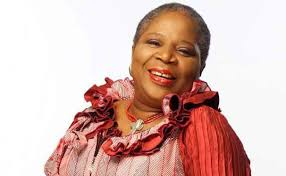
There are certain performers who seem to carry their country’s culture in their bearing. Onyeka Onwenu is one of them. In a career spanning four decades, she has moved between music, acting, television, writing, and advocacy with an assurance that comes not from privilege but from clarity of purpose. She is the woman who sang “One Love” with King Sunny Ade and made it feel like both a love song and a national prayer. She is the actress who brought depth and dignity to Nollywood at a time when the industry was still finding its footing. She is, in the fullest sense, a Nigerian institution.
Onyeka Onwenu Biography
| Full Name | Onyeka Onwenu |
|---|---|
| Date of Birth | February 26, 1952 |
| Place of Birth | Port Harcourt, Rivers State, Nigeria |
| Nationality | Nigerian |
| Ethnicity | Igbo |
| Occupation | Singer, Actress, Broadcaster, Author, Activist |
| Known For | “One Love” (with King Sunny Ade), “Ekwe,” Nollywood films, social activism |
| Religion | Christian |
Early Life and Background
Onyeka Onwenu was born on February 26, 1952, in Port Harcourt, Rivers State, to a family with a strong public profile. Her father, Ozoemena Onwenu, was a prominent politician and one of the signatories to the Nigerian independence declaration — a biographical fact that gave Onyeka a sense from early on that public life carried responsibilities beyond personal ambition. Growing up in a household shaped by civic engagement and intellectual seriousness meant that even her artistic pursuits were never entirely divorced from questions of purpose and service.
The Nigerian Civil War (1967–1970) deeply marked her family and her generation. The experience of that conflict — with its trauma, displacement, and profound questions about Nigerian identity — runs as an undercurrent through much of her creative and public work. She has spoken about it in interviews and incorporated its emotional weight into her understanding of what Nigerian unity means and why it must be actively maintained.
Education
Onyeka Onwenu received an excellent education. She attended primary and secondary school in Nigeria before proceeding to the Simmons College in Boston, Massachusetts, in the United States, where she studied Communications. Her American education gave her access to the media and performing arts infrastructure of one of the world’s most developed entertainment cultures, and she returned to Nigeria with both technical skills and a broader artistic perspective.
She later obtained an MFA (Master of Fine Arts) from the New York Film Academy, deepening her formal grounding in media and performance. This educational background — unusually rigorous by the standards of Nigerian entertainers of her generation — contributed significantly to the polish and intellectual seriousness that have characterized her career.
Career Journey
Broadcasting and Early Fame
Onyeka Onwenu began her professional life in broadcasting, working with the Nigerian Television Authority (NTA). Her television work gave her national visibility and credibility before her music career fully took off. She was already a familiar, trusted face to Nigerian audiences when her first major musical success arrived.
Music Career: Ekwe, Endless Life, and “One Love”
Her debut album Endless Life (1980) established her as a significant musical voice. But it was her subsequent albums — particularly the 1984 hit “Ekwe” — that secured her status as one of Nigeria’s most important female artists. “Ekwe” was a socially conscious song that addressed themes of community, identity, and pride in Igbo heritage. It remains one of the most celebrated examples of Nigerian music with explicit cultural and political content delivered through accessible pop.
Her collaboration with King Sunny Ade on the album Wait for Me (1984) produced the duet “One Love” — one of the most beloved Nigerian songs of its era. The chemistry between the Igbo singer and the Yoruba juju icon was a potent symbol at a time when inter-ethnic harmony was a genuine national aspiration. The song was not just musically beautiful; it was politically significant.
Acting and Nollywood
Onyeka Onwenu brought the same seriousness to her acting career that she brought to everything else. She appeared in several notable Nollywood productions, earning recognition for nuanced performances that went beyond the surface-level characterizations that sometimes characterized early Nollywood work. Her screen presence — composed, intelligent, and emotionally layered — made her a natural choice for roles requiring gravitas.
Writing and Activism
Her memoir, My Father’s Daughter, published in 2020, was one of the most talked-about Nigerian books of that year. It offered a deeply personal account of her life — her family, her career, the men she loved, and the faith that sustained her. The book was frank, literary, and deeply honest in a way that Nigerian celebrity memoirs rarely are.
She has also been actively involved in advocacy work, including HIV/AIDS awareness campaigns and various social causes connected to the welfare of Nigerian women and children. She served in various public capacities, including a period as Director-General of the National Center for Women Development.
Personal Life
Onyeka Onwenu has been private about her personal life, though her memoir addressed it with considerable candor. She has two sons. She has spoken about the challenges of maintaining personal relationships in the public eye, and about the choices she made regarding her family and career across the decades. Her Christian faith is central to her identity and features prominently in how she describes her life’s journey.
Net Worth
Onyeka Onwenu’s precise net worth has not been publicly confirmed. Her earnings have come from a diverse portfolio: music royalties, acting, television work, writing, public speaking, and her public service roles. She is considered financially successful by any Nigerian industry standard, though her wealth has never been the primary focus of her public narrative.
Conclusion
Onyeka Onwenu has never been just one thing. She is a singer who understood that music could build bridges between Igbo and Yoruba Nigeria. She is an actress who brought craft to an industry still finding its voice. She is a writer who told the truth about herself in public. And she is an advocate whose sense of civic duty was inherited from a father who helped sign Nigeria into existence. That combination — art, integrity, and public purpose — is her legacy, and it is rare anywhere in the world.
Frequently Asked Questions (FAQs)
What is Onyeka Onwenu best known for?
She is best known for her music — particularly the song “Ekwe” and her collaboration with King Sunny Ade on “One Love” — and for her acting roles in Nollywood, as well as her memoir My Father’s Daughter.
Where is Onyeka Onwenu from?
She was born in Port Harcourt, Rivers State, and is of Igbo ethnic heritage, originally from Imo State.
Did Onyeka Onwenu write a book?
Yes. Her memoir My Father’s Daughter was published in 2020 and received wide acclaim for its candid account of her life, family, faith, and career.
Who is Onyeka Onwenu’s father?
Her father was Ozoemena Onwenu, a prominent Nigerian politician who was one of the signatories to Nigeria’s independence declaration.
What is Onyeka Onwenu’s most famous song?
“Ekwe” (1984) and “One Love” (a duet with King Sunny Ade) are her most celebrated musical works.
Disclaimer: Content in this biography is derived from publicly accessible sources and is shared for general awareness. The publisher assumes no responsibility for errors, omissions, or outdated information that may be present.
Leave a Reply