
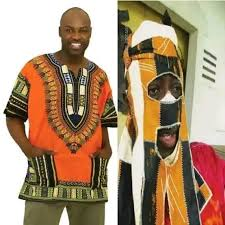
In the history of Nigerian music, no artist has managed the tension between anonymity and fame quite like Lagbaja. For decades, he has performed wearing a full mask — concealing his face completely while delivering some of the sharpest social commentary in Afrobeat and Afrojuju music. The mask is not a gimmick. It is a philosophical statement about identity, community, and who really matters in public life. In Yoruba, “Lagbaja” means “so-and-so” or “a certain somebody” — an anonymous everyman. The name itself is the message.
Lagbaja Biography
| Stage Name | Lagbaja |
|---|---|
| Real Name | Kept deliberately private (widely believed to be Bisade Ologunde) |
| Nationality | Nigerian |
| Ethnicity | Yoruba |
| Occupation | Musician, Saxophonist, Composer, Social Commentator |
| Genre | Afrojuju, Afrobeat, Jazz-influenced Nigerian Pop |
| Known For | Masked performances, “Konko Below,” social and political commentary through music |
| Years Active | 1990s – present |
The Mystery of Identity: What We Know
Lagbaja has maintained his masked identity consistently since emerging on the Nigerian music scene in the 1990s. He has never officially confirmed his real name, though over the years credible reporting has identified him as Bisade Ologunde, a Lagos-born musician with a background in jazz and classical music. He has never denied this identification, but he has also never confirmed it — and that deliberate ambiguity is part of the artistic project.
The concept behind the mask is rooted in Yoruba masquerade tradition, where masked performers embody communal spirits rather than individual personalities. By masking himself, Lagbaja positions his art not as the expression of one man’s ego, but as the voice of ordinary Nigerians — the anonymous millions whose stories rarely make headlines. It is a remarkably consistent artistic statement, maintained over decades in an industry that rewards personality and spectacle.
Early Life and Musical Background
What is known about Lagbaja’s background suggests a formal music education that is evident in the sophistication of his compositions. He is a trained saxophonist, and his musical arrangements draw on jazz harmony, Yoruba percussion traditions, and Afrobeat structures in ways that reflect deep musical literacy. His early exposure to King Sunny Ade’s juju music is frequently cited as a formative influence — the talking drums, layered rhythms, and call-and-response vocal structures of juju are all present in Lagbaja’s sound.
He grew up in Lagos, where the cosmopolitan cultural environment exposed him to a wide range of musical forms alongside the traditional Yoruba sounds of his heritage. Before his breakthrough as Lagbaja, he reportedly worked as a session musician and music teacher, quietly building technical mastery.
Career Journey: The Masked Artist Who Would Not Be Ignored
The 1990s Emergence
Lagbaja emerged on the Lagos music scene during the 1990s — a politically charged period in Nigeria defined by military governance under General Sani Abacha and intense public frustration with state repression and corruption. It was, in retrospect, precisely the right moment for an anonymous artist whose music questioned power and gave voice to the powerless.
His early performances were built around the persona with extraordinary discipline. He appeared on stage, in music videos, and in all public appearances fully masked. The mystery generated enormous media attention in Nigeria, with newspapers and entertainment journalists regularly speculating about his identity. Rather than deflect this scrutiny, Lagbaja leaned into it — the guessing game became part of the cultural conversation around his work.
Key Albums and Commercial Success
His album releases throughout the 1990s and 2000s established him as one of Nigeria’s most inventive artists. Lagbaja (1997), We Before Me (2002), and Konko Below remain among his most celebrated works. “Konko Below” — which addressed corruption and the suffering of ordinary Nigerians — became a genuine anthem, the kind of song that cuts across class lines and generational divides.
His live concerts were renowned spectacles, featuring dancers in elaborate Yoruba masquerade-inspired costumes, high-energy performances, and a theatrical quality that placed his shows in a category above typical Nigerian pop concerts.
International Recognition
Lagbaja’s music gained significant international attention, particularly in world music and jazz circles. He performed at international festivals in Europe and North America, where audiences engaged with both the musical quality and the philosophical concept behind the masked performer. He was discussed in academic and critical contexts as an artist who was doing something genuinely original with the intersection of African tradition and contemporary popular music.
Musical Philosophy and Legacy
At the heart of Lagbaja’s work is a belief that the most important stories in Nigerian society are those of ordinary people — the traders, workers, and families who make up the majority but rarely see their lives reflected in mainstream culture. His masked persona democratizes authorship: if there is no famous face behind the music, then the music belongs to everyone.
He also represents a form of artistic courage. In a Nigerian entertainment industry that increasingly rewards individual celebrity and social media personality, Lagbaja has maintained for decades a stance that says: the music matters, not the musician. That is an unusual position to take and an even more unusual one to sustain.
Net Worth
Lagbaja’s precise net worth has not been publicly confirmed. His income has come from album sales, live performances — which command premium prices given their theatrical scale — and likely from licensing and royalty arrangements. Given his decades of consistent success in Nigeria and international bookings, he is considered one of the more financially successful artists of his generation, though exact figures remain private.
Personal Life
Lagbaja keeps his personal life strictly private, consistent with his broader philosophy of artistic anonymity. What is generally known is that he is a family man who lives in Lagos. He has spoken, in rare interviews conducted with his mask on, about family, faith, and his responsibilities as an artist in society. Beyond that, personal details remain deliberately withheld.
Conclusion
Lagbaja has built one of the most philosophically coherent careers in African music by asking a simple question: what if the art were more important than the artist? His answer — a mask, decades of consistency, and a body of work that genuinely speaks for the voiceless — is as compelling today as it was when he first appeared. In a media landscape obsessed with celebrity faces, the faceless man with the saxophone remains one of Nigeria’s most important artists.
Frequently Asked Questions (FAQs)
Who is Lagbaja in real life?
Lagbaja has never officially confirmed his identity. He is widely believed to be Bisade Ologunde, a Lagos-born musician, though this has never been publicly confirmed by the artist himself.
Why does Lagbaja wear a mask?
The mask is rooted in Yoruba masquerade tradition and is a deliberate artistic and philosophical statement. In Yoruba, “Lagbaja” means “a certain person” or “anonymous somebody,” and the mask embodies the idea that his music belongs to all ordinary Nigerians rather than to one individual.
What genre of music does Lagbaja make?
He performs a style often described as Afrojuju — a fusion of Afrobeat, traditional Yoruba juju music, and jazz-influenced arrangements, delivered with sharp social commentary.
Is Lagbaja still active?
Yes. Lagbaja has remained active in the Nigerian music scene, continuing to perform and record across multiple decades.
What is Lagbaja’s most famous song?
“Konko Below” is widely regarded as his signature work — a bold commentary on Nigerian corruption and social inequality that became a nationwide anthem.
Disclaimer: Content in this biography is derived from publicly accessible sources and is shared for general awareness. The publisher assumes no responsibility for errors, omissions, or outdated information that may be present.
Leave a Reply