
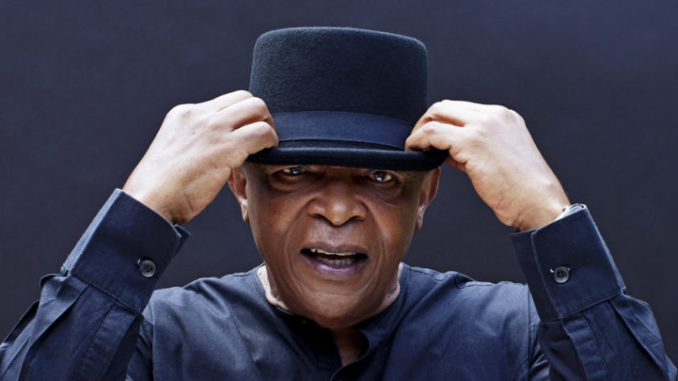
Few musicians in African history have lived as many lives as Hugh Masekela — jazz trumpeter, protest artist, exile, international star, political activist, and reluctant prophet. His trumpet sang against apartheid when speaking openly against it could cost your freedom. His music traveled with him across decades of enforced exile and returned home, as he did, when South Africa finally came to itself. He is not merely a great musician. He is a great African story.
Hugh Masekela Biography
| Full Name | Hugh Ramapolo Masekela |
|---|---|
| Date of Birth | April 4, 1939 |
| Place of Birth | Witbank (Emalahleni), Mpumalanga, South Africa |
| Nationality | South African |
| Ethnicity | Sotho/Tswana |
| Occupation | Musician, Trumpeter, Flugelhorn Player, Composer, Singer |
| Genre | Jazz, Afrojazz, Mbaqanga, African Pop |
| Known For | “Bring Him Back Home,” “Grazing in the Grass,” fight against apartheid |
| Notable Relationship | Miriam Makeba (married 1964–1966) |
Early Life and Background
Hugh Ramapolo Masekela was born on April 4, 1939, in Witbank — now called Emalahleni — in what is today Mpumalanga Province, South Africa. He grew up during the formative years of apartheid, the system of racial segregation and oppression that would define South African political life for decades and directly shape his artistic and personal trajectory.
As a child, he was profoundly moved by the 1950 American film Young Man with a Horn, which dramatized the life of jazz trumpeter Bix Beiderbecke. The impact of seeing a musician who poured his entire soul into a brass instrument left a mark that never faded. He began learning the trumpet as a teenager, encouraged initially by Archbishop Trevor Huddleston — an anti-apartheid British clergyman who purchased the young Masekela his first proper trumpet. That act of patronage from a man of conscience toward a child of enormous potential is one of the more quietly significant moments in African music history.
Education
Masekela was musically educated in Johannesburg, where he attended St. Peter’s Secondary School. His musical education accelerated through his involvement with the Huddleston Jazz Band, which gave young Black South African musicians access to formal training and performance experience at a time when apartheid policies severely limited such opportunities.
After leaving South Africa in 1960 — an exit that became an exile when the political situation made return impossible — he studied at the Guildhall School of Music in London and later at the Manhattan School of Music in New York, where he was exposed to the full depth and breadth of American jazz at its mid-century peak.
Career Journey
Early Career in South Africa and the Jazz Scene
Before his exile, Masekela was already a significant figure in Johannesburg’s jazz underground. The city’s Black townships in the 1950s had a thriving jazz culture — one that absorbed American bebop and swing while fusing them with South African township rhythms to create uniquely South African sounds. Masekela was part of the Jazz Epistles, a groundbreaking South African jazz ensemble, alongside pianist Dollar Brand (later Abdullah Ibrahim) and other luminaries who would all eventually be scattered by apartheid’s reach.
Exile, New York, and International Stardom
Masekela left South Africa in 1960 following the Sharpeville Massacre and the subsequent banning of the African National Congress. What followed was a thirty-year exile. In New York, he built an international career that eventually produced his biggest commercial hit — the instrumental “Grazing in the Grass” (1968), which reached number one on the US Billboard charts and sold over four million copies. It was a joyful, life-affirming piece of music that gave little indication of the political anguish behind the man who recorded it.
Throughout his exile, Masekela lived and worked across multiple countries — the United States, Britain, Guinea, Liberia, Ghana, Botswana, and beyond. Each location left its mark on his music, and his style became a synthesis of pan-African jazz influences.
“Bring Him Back Home” and Anti-Apartheid Activism
His 1987 song “Bring Him Back Home (Nelson Mandela)” — written and performed when Mandela was still imprisoned on Robben Island — became one of the most important protest songs in African history. It was the centerpiece of the 1988 Nelson Mandela 70th Birthday Tribute concert at Wembley Stadium, watched by an estimated 600 million television viewers worldwide. The song placed Masekela at the heart of the global anti-apartheid movement and demonstrated how art could be a form of advocacy that political speeches alone could not achieve.
Return to South Africa and Later Career
With the unbanning of the ANC and the release of Nelson Mandela in 1990, Masekela returned to South Africa after three decades in exile. His homecoming was a joyful cultural event. He continued recording and performing prolifically, including collaborations with Paul Simon (the Graceland tour) and with Miriam Makeba, his former wife, with whom he maintained a musical and professional partnership long after their marriage ended.
Personal Life
Hugh Masekela was married to singer Miriam Makeba from 1964 to 1966. Their relationship was one of music’s most celebrated partnerships — two exiled South African artists, both towering figures, navigating fame and displacement together. The marriage was short-lived, but their artistic bond endured for decades.
He was married twice more in later life. Masekela was open in his later years about his past struggles with alcohol and substance use, writing about them with honesty in his autobiography Still Grazing: The Musical Journey of Hugh Masekela (2004). His recovery and continued creative output into his seventies was a testament to his resilience.
Net Worth
Hugh Masekela built a substantial financial legacy through decades of recording, touring, and residual royalties from a catalogue that includes one of the top-selling instrumental singles in US chart history. While precise figures were never publicly confirmed, his financial standing reflected a career of genuine international commercial success alongside his artistic significance.
Legacy
Hugh Masekela is the Father of South African Jazz — a title that understates rather than overstates his significance. He helped create the international profile of African jazz, inspired generations of South African musicians, and used his art in the service of one of the 20th century’s great moral struggles. His music contains multitudes: joy and sorrow, protest and celebration, exile and homecoming. That is the range of a true artist.
Conclusion
Hugh Masekela lived through events that would have broken lesser people and came out the other side still playing, still singing, still insisting that beauty and justice belong together. His trumpet was never just an instrument — it was a declaration. And that declaration echoes across South Africa and across the continent to this day.
Frequently Asked Questions (FAQs)
What is Hugh Masekela’s most famous song?
“Grazing in the Grass” (1968) was his biggest commercial hit, reaching number one in the United States. “Bring Him Back Home (Nelson Mandela)” (1987) is considered his most politically significant work.
Was Hugh Masekela married to Miriam Makeba?
Yes. They were married from 1964 to 1966. Despite the short duration of their marriage, they maintained a professional and personal friendship for many years afterward.
Why did Hugh Masekela leave South Africa?
He went into exile in 1960 following the Sharpeville Massacre and the political crackdown that made it impossible for anti-apartheid artists to remain safely in South Africa. He spent approximately thirty years in exile.
What instrument did Hugh Masekela play?
He was primarily a trumpeter and flugelhorn player, though he was also a vocalist, composer, and bandleader.
When did Hugh Masekela return to South Africa?
He returned following Nelson Mandela’s release from prison and the unbanning of the ANC in 1990, after thirty years in exile.
Disclaimer: Content in this biography is derived from publicly accessible sources and is shared for general awareness. The publisher assumes no responsibility for errors, omissions, or outdated information that may be present.
Leave a Reply