
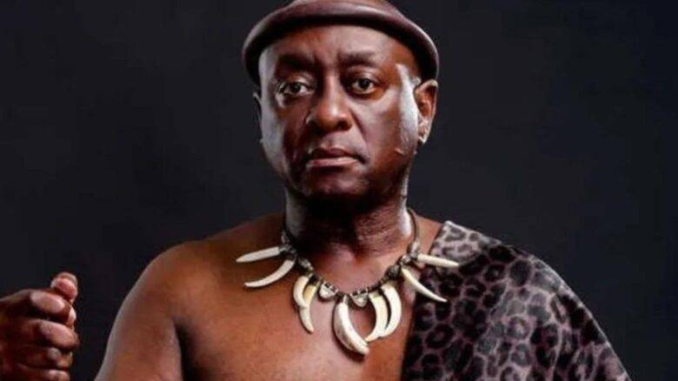
When Sarafina! opened on Broadway in 1988 — a musical about the Soweto Uprising set in an apartheid-era South Africa — it did something that political speeches and newspaper editorials could not quite accomplish: it made American and European audiences feel the reality of what Black South African children were living through. That was the genius of Mbongeni Ngema. He understood that art could carry truth into rooms that argument could not enter. He built his career on that understanding, and the result is one of the most remarkable bodies of theatrical work produced anywhere in Africa during the 20th century.
Mbongeni Ngema Biography
| Full Name | Mbongeni Ngema |
|---|---|
| Date of Birth | June 1, 1955 |
| Place of Birth | Verulam, KwaZulu-Natal, South Africa |
| Nationality | South African |
| Ethnicity | Zulu |
| Occupation | Playwright, Theatre Director, Composer, Actor, Choreographer |
| Known For | Sarafina!, Asinamali!, anti-apartheid theatrical work |
Early Life and Background
Mbongeni Ngema was born on June 1, 1955, in Verulam, KwaZulu-Natal, South Africa. His Zulu heritage gave him deep roots in a culture with a rich tradition of oral storytelling, song, and communal performance — traditions that would shape the theatrical language he later developed.
Growing up in apartheid South Africa, Ngema experienced first-hand the system of institutionalized racial separation, economic deprivation, and cultural suppression that defined Black South African life in the second half of the 20th century. That experience became the raw material for his art — not in a merely autobiographical sense, but as a collective testimony that he chose to carry on behalf of his community.
He came to theatre through music and performance rather than formal dramatic training. His early exposure to Zulu musical traditions, combined with the influence of South African township culture — with its vibrant street music, dance, and storytelling — gave him an instinct for popular theatrical forms that could reach mass audiences without becoming simplistic.
Career Journey: Theatre as Resistance
The Gibson Kente Connection
Ngema’s entry into professional theatre came through his work with Gibson Kente, widely considered the father of Black South African township theatre. Working with Kente as an actor and musician in the late 1970s gave him direct exposure to the mechanics of popular South African theatre — how to make shows that resonated with Black township audiences, how to use music and dance as emotional amplifiers, and how to encode political meaning in forms that could pass, at least partially, under the radar of apartheid censors.
Asinamali! (1985)
Asinamali! — which means “We have no money” in Zulu — was Ngema’s breakthrough as a director and playwright. Created in 1985, it depicted the conditions of migrant labor in apartheid South Africa through the stories of five Black men imprisoned for refusing to pay rents that were raised as part of the state’s economic control mechanisms. The play premiered in Durban, toured South Africa, and was eventually produced internationally, winning an Obie Award in New York and bringing Ngema to the attention of international theatre institutions.
Sarafina! (1987/1988)
Sarafina! was Ngema’s masterwork — a musical about a young Black South African girl and her fellow students who dream of performing a show about Nelson Mandela and their own resistance to apartheid education. The play captured the energy, defiance, and humanity of the 1976 generation with an emotional directness that was both artistically rigorous and politically potent.
It opened in Johannesburg in 1987 and transferred to Broadway in 1988, where it ran for over 500 performances and received five Tony Award nominations. It was a genuine commercial and critical success on Broadway — a remarkable achievement for an African playwright whose primary subject was the suffering and resistance of people who had virtually no presence in mainstream American media. The 1992 film adaptation starred Whoopi Goldberg alongside a cast of remarkable young South African performers.
Post-Apartheid Work and Controversies
After the end of apartheid, Ngema continued working in South African theatre and occasionally attracted controversy — most notably for a 2002 song “AmaNdiya” that generated significant criticism for its content regarding Indian South Africans. The episode represented a difficult chapter in his public life and prompted extensive national debate about the limits of artistic expression and hate speech in the post-apartheid context.
He continued producing theatrical work and remained a figure in South African cultural life, though his post-apartheid profile was more complicated than his celebrated anti-apartheid era.
Personal Life
Mbongeni Ngema has been married multiple times. His personal life has included significant relationships within the South African entertainment community. He has children from different relationships. Ngema has spoken in interviews about the demands of a life devoted to theatre and the personal costs of that commitment.
Net Worth
Ngema’s net worth has not been publicly confirmed in detail. His earnings from theatrical productions — including royalties from the long runs of Sarafina! internationally — music composition, and directing have been substantial by South African arts industry standards. He built a career on an international scale that very few African theatre practitioners have achieved.
Conclusion
Mbongeni Ngema showed the world what Black South African theatre could look and feel like when given access to an international stage. Sarafina! is his crowning achievement — a work that combined the energy of township performance with the structural ambitions of Broadway musical theatre, and in doing so, carried the voices of Soweto’s young people to audiences on the other side of the world. That is a significant artistic act, and one that deserves to be remembered clearly.
Frequently Asked Questions (FAQs)
What is Mbongeni Ngema most famous for?
He is best known for creating, directing, and composing the music for Sarafina!, the anti-apartheid musical that ran on Broadway from 1988 and received five Tony Award nominations.
Where is Mbongeni Ngema from?
He was born in Verulam, KwaZulu-Natal, South Africa, and is of Zulu heritage.
What does “Asinamali” mean?
“Asinamali” is a Zulu phrase meaning “We have no money.” It was the title of Ngema’s breakthrough 1985 play about the conditions of Black South African migrant laborers under apartheid.
Was Sarafina turned into a film?
Yes. The 1992 film adaptation of Sarafina! starred Whoopi Goldberg and featured many South African performers. It brought the story to an even wider international audience.
Is Mbongeni Ngema still active?
He has remained active in South African theatre and cultural life, though his post-apartheid profile has been more complex given various controversies. He continues to be recognized as a significant figure in South African theatrical history.
Disclaimer: Content in this biography is derived from publicly accessible sources and is shared for general awareness. The publisher assumes no responsibility for errors, omissions, or outdated information that may be present.
Leave a Reply